
MTE Generator Dismantling in B.367: Clearing the Way for POPS+
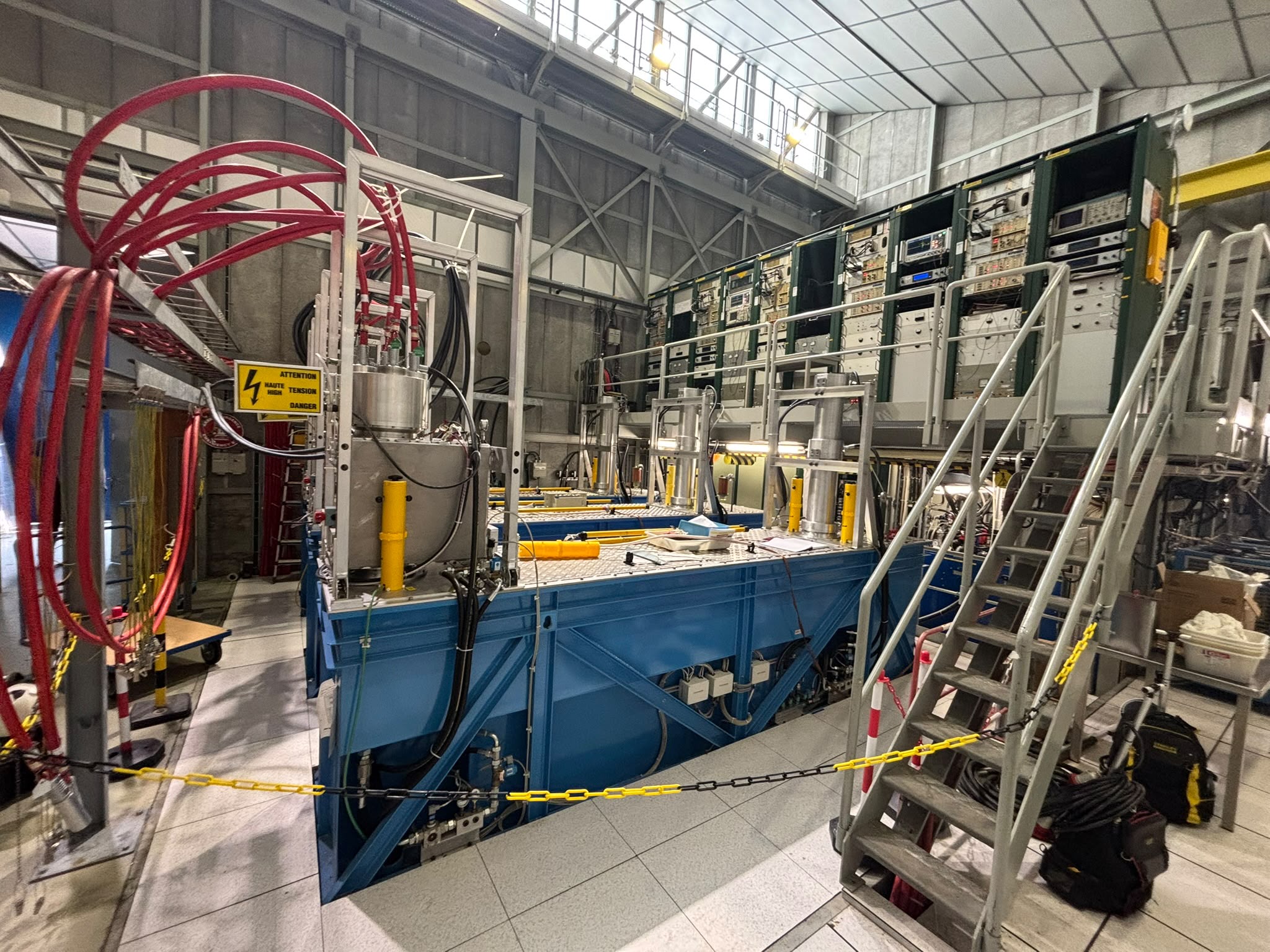
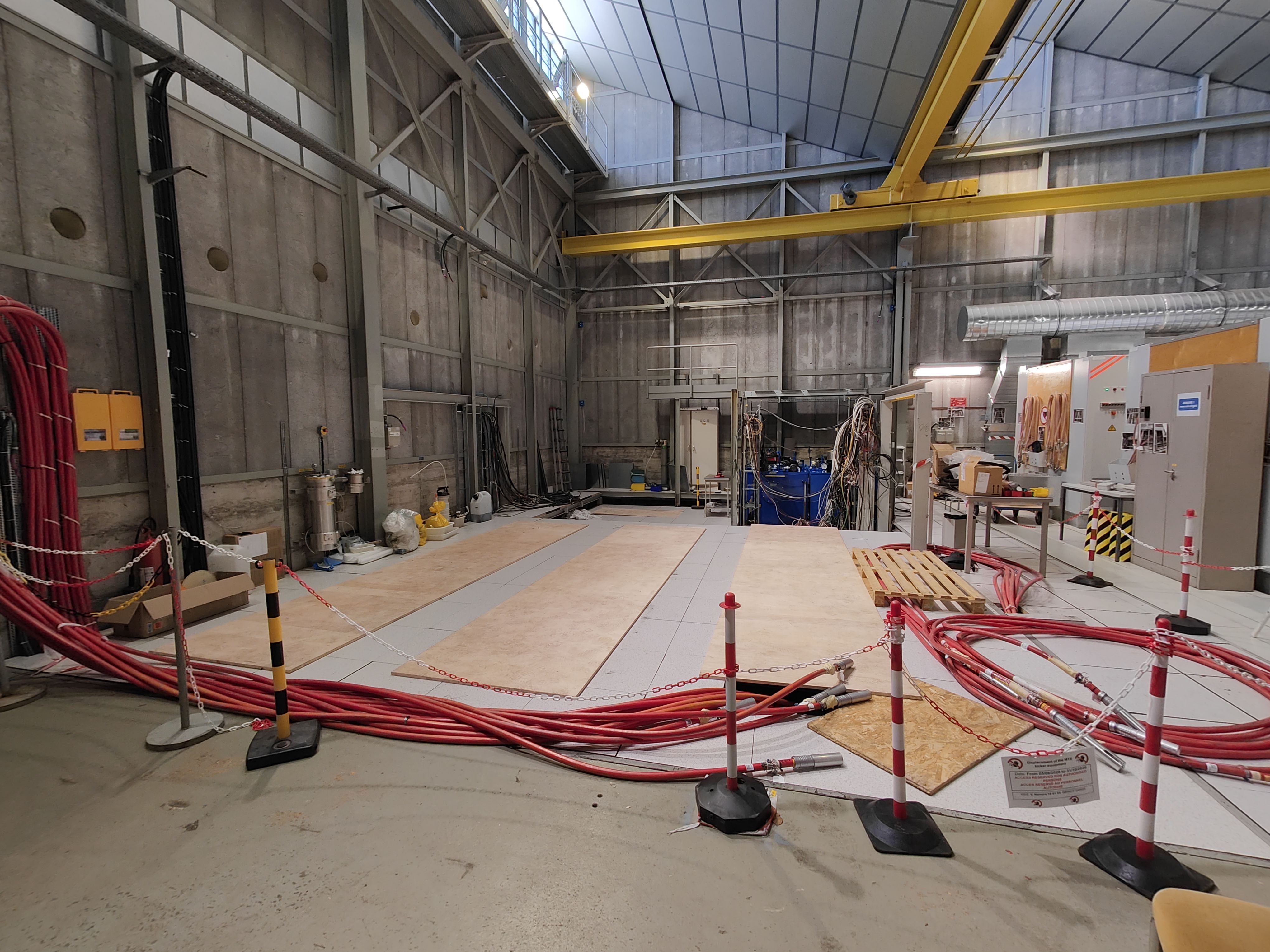
The generators of the Multi-Turn Extraction (MTE) kicker system have operated from Building 367 since 2015, playing a central role in beam production across the PS complex. With LS3 now underway, this space is needed for the future POPS+ installation, and clearing it is not a small task. The available space inside and around B.367 is tightly constrained at approximately 77 m², so every step of the operation has to be carefully planned and coordinated with the other LS3 activities taking place in the area, from the dismantling sequence itself to equipment handling, temporary storage, decabling and transport logistics.
The campaign started on 3 August 2026 and involves close collaboration between SY-ABT and several supporting CERN groups. The scale of the work has been considerable. Several tonnes of high-voltage equipment have been removed, thousands of litres of Midel oil and kilograms of SF6 gas safely recovered, and dozens of control racks and crates cleared from the building, all within a confined space and in parallel with the broader LS3 programme.
Releasing the MTE area in B.367 is a key enabling step for the POPS+ programme, and the handover from SY-ABT to SY-EPC is scheduled for mid-November 2026, a key deadline for the programme to move forward. Once complete, the space will be prepared for the POPS+ installation, contributing to the preparation of the PS complex for its future operation.
Contributors: Vasco Namora & Marta Vargas
On behalf of LS3 Committee.
A 30-Year-Old Particle Detector Says Goodbye to Its Krypton
Earlier this summer, one of CERN's longest-running particle physics experiments finished collecting data permanently. It's now being dismantled to make room for a new experiment in the same underground space: the Search for Hidden Particles (SHiP) fixed-target experiment. It meant carefully emptying out a key detector that had been running non-stop since 1995. This activity is part of the LS3 programme in the experimental areas.
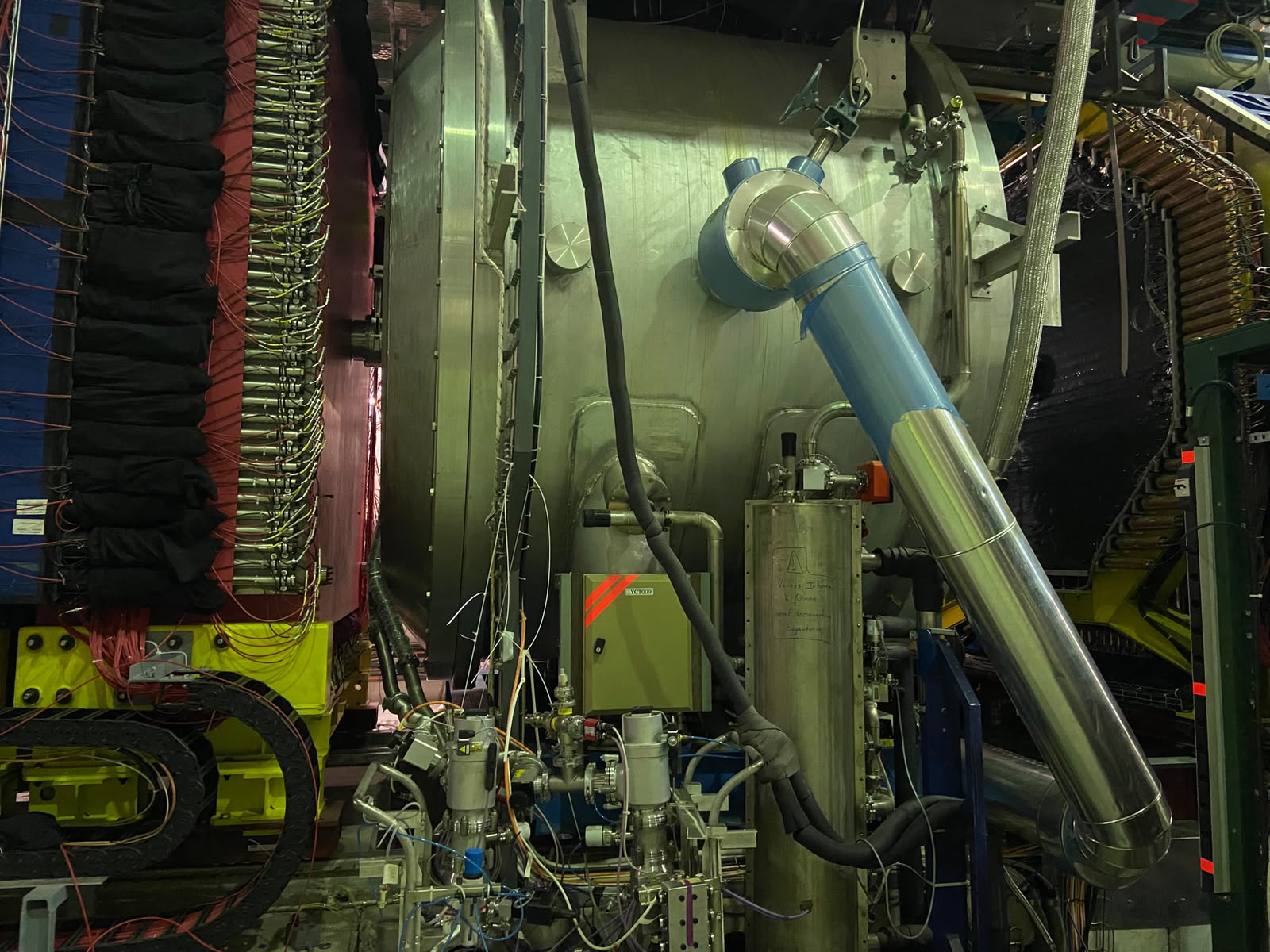
This detector used liquid krypton, a rare gas, to measure the energy of particles produced in collisions. To work properly, the krypton had to stay extremely cold and pure at all times, around -154°C, which required a constant cooling system to stop it from evaporating. Krypton is very rare in air, about one part per million, making it expensive and valuable. As a result, the detector was always connected to a large backup tank, kept at cold temperature and ready in case the krypton ever needed to be moved out quickly. In three decades of operation, that backup was never actually needed.
That changed this August. After careful planning considering especially safety aspects, the team began permanently draining the detector. The process required caution: krypton gas is three times heavier than air, so a leak could push out oxygen from the area and create a suffocation risk. For this reason, only a small, specialised and trained team was allowed in during the operation. Everything went smoothly, over five days, about 22 tons of liquid krypton were safely transferred into the storage tank.
Since the underground area must be fully cleared for the next experiment, the krypton now needs a new home. A location has been found nearby, where the storage tank will get backup power and a permanent cooling supply to keep it safe. In the coming weeks, the team will test whether the tank can hold the krypton safely for several days without active cooling, since that will be needed during transport.
Contributors: Ludovic Alaux, Johan Bremer & Marta Vargas
On behalf of LS3 Committee
Making Way for Higher Luminosity: The D1 Separation Dipoles Removal
Inside the LHC, the two particle beams run side by side in opposite directions, kept at a distance of 194 mm from each other for most of their 27 km journey round the ring. At the collision points, the beams need to be brought together in a common vacuum chamber so that particles can collide. In IR1 for the ATLAS experiment and IR5 for the CMS experiment, this is achieved by a set of normal conducting magnets called D1 separation/recombination dipoles, which steer the beams towards each other just before the collision point.
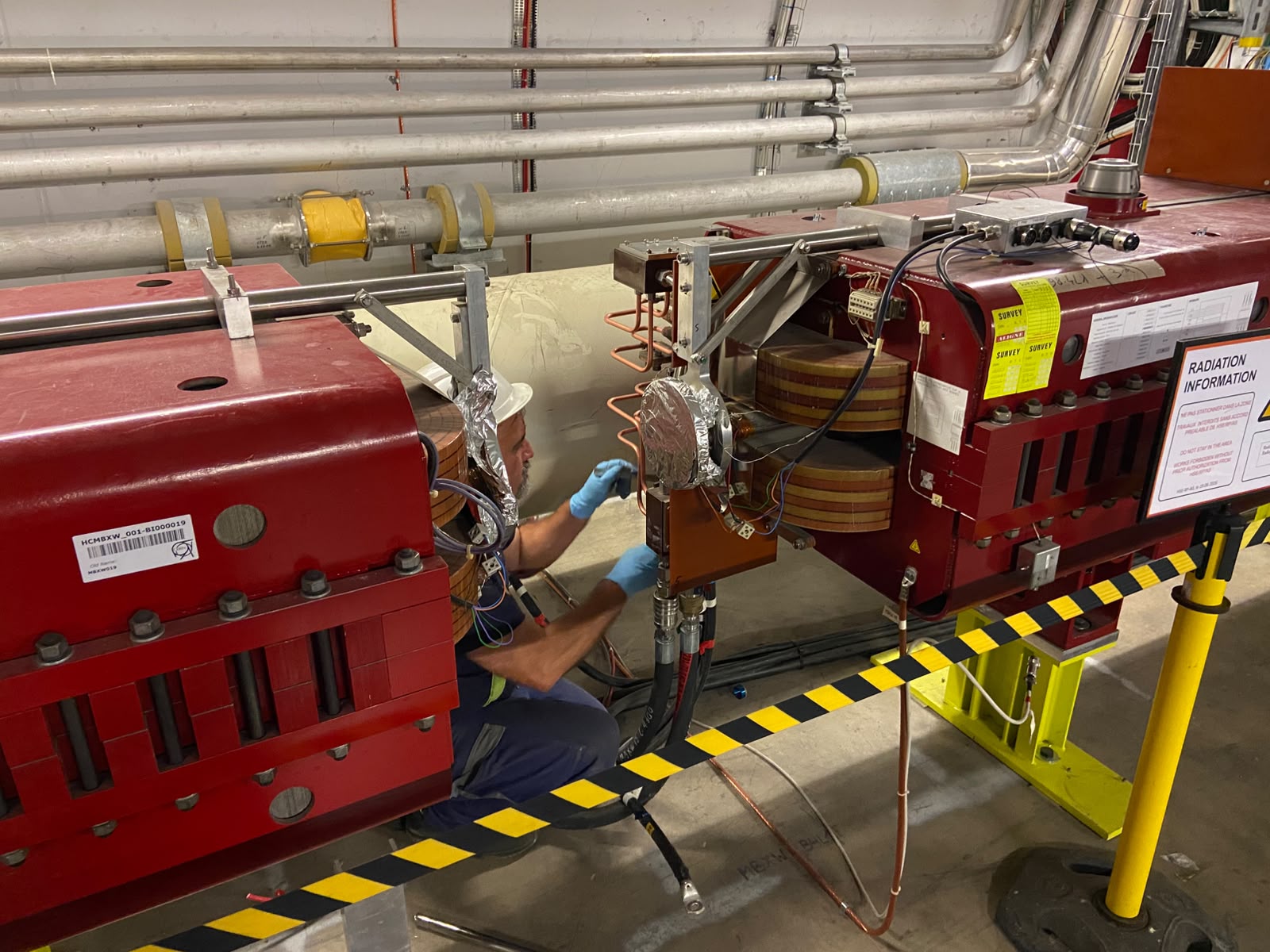
Each D1 system is made up of six magnets (known as MBXW), placed on either side of the collision point. These magnets have been running reliably since the LHC first started up in 2008.
In September 2026, only two months after LHC entered LS3 mode, the MBXW magnets were taken out as part of a major upgrade programme called the High-Luminosity LHC (HL-LHC). They will be replaced by a new, more powerful variant using superconducting technology. The new magnets have a larger opening for the beam, necessary to accommodate the higher beam intensities and larger crossing angles in the HL era. The use of superconducting technology allows them to be shorter, making room for an additional system called the crab cavities.
Taking out the old magnets was a complex operation that brought together many different teams marking an important milestone, successfully met according to the optimised schedule thanks to the expertise of many teams, specialists in magnets, vacuum systems, electrical networks, alignment surveys, civil infrastructure, and equipment transport and handling.
Contributors: Marta Vargas Jorba & Pierre Alexandre Thonet.
On behalf of the LS3 coordination.
The disconnection of the LHC has begun
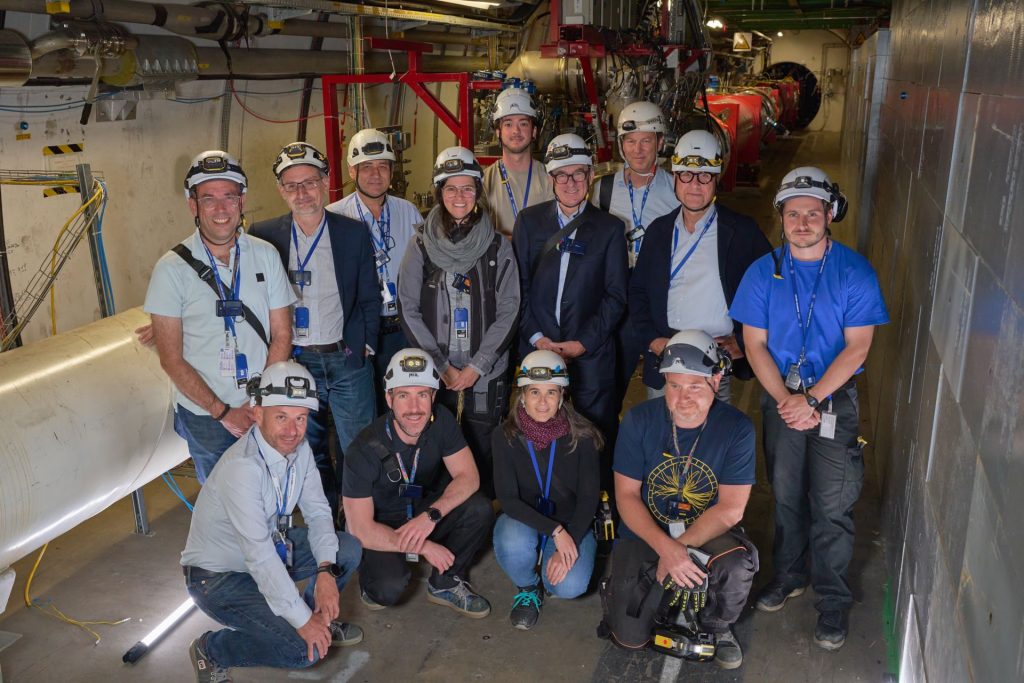
Work has begun to disconnect the focusing magnets on either side of the ATLAS and CMS experiments, a key step on the road to the HiLumi LHC.
The 27 km circumference of the Large Hadron Collider (LHC) contains thousands of magnets of different types – dipoles, quadrupoles, sextupoles, octupoles, decapoles, etc. – which each play a very specific role. Among them are the inner triplets: sets of three quadrupoles (hence the name) located on either side of the four main LHC experiments and used to tightly focus the beams before they collide inside the detectors. The beams must be “compressed” as much as possible in order to increase the probability of particles colliding. These magnets are therefore essential for increasing the luminosity of the LHC, i.e. the number of collisions that occur in a given period of time. The higher the luminosity, the more data the experiments can gather.
This is where the future High-Luminosity LHC (HiLumi LHC) and the replacement of the current inner triplets come in. This major operation is part of the third long shutdown (LS3), and the first magnet interconnection was cut this week. Today, CERN Director-General Mark Thomson visited LHC Point 1 (the ATLAS experiment) to mark the start of the operation.
“The replacement of these magnets with the new HiLumi LHC inner triplets is crucial for the coming high-luminosity years.The first quadrupole of the new triplets should arrive in the tunnel at the start of 2029.In total, 16 cryostats and 28 cryo-assemblies will be installed – a major undertaking,” explains Jean-Philippe Tock, Head of the LS3 Coordination Team.
The new inner triplets are the result of many years of research and development and represent a major step forward compared to the niobium-titanium magnets currently installed in the LHC. Their niobium-tin superconducting coils allow them to produce magnetic fields of 11.3 tesla, about 40% stronger than those generated by the current magnets. They will be installed around the ATLAS and CMS experiments. ALICE and LHCb, which have different physics programmes and modes of operation, do not require the same increase in instantaneous luminosity and will therefore be able to keep their current inner triplets, although these will be improved to allow both experiments to benefit from the luminosity increase.
Since 7 September, teams have been dismantling the sections of the machine on either side of ATLAS and CMS in order to remove the 28 superconducting magnets (including the inner triplets) that need to be replaced.
“Today’s event is a major milestone for CERN, especially for the HiLumi LHC project team.The current inner triplets date back to the LHC construction phase and were installed in the machine between 2005 and 2007.After nearly twenty years of operation, they will give way to a new generation of even more powerful magnets.It’s truly remarkable to witness such a handover from one generation of innovation to the next,” says Markus Zerlauth, the HiLumi LHC Project Leader.
Contributors: Anaïs Schaeffer
On behalf of LS3 Committee
All CERN accelerators now on the road to HiLumi
The accelerator complex and Antimatter Factory delivered their last beams, marking the end of the third run and the start of major upgrade work to prepare for the HiLumi era
CERN’s injector complex and Antimatter Factory took their final steps towards Long Shutdown 3 (LS3) this morning, as the last particle beams were extracted and the machines fell silent. This milestone follows the shutdown of the Large Hadron Collider (LHC) in June, which marked the beginning of LS3 for the Laboratory’s flagship accelerator. While the LHC has already entered its transformation phase, the machines that feed it – the injectors – have continued delivering proton and ion beams throughout the summer.
The accelerators that make up the injector complex accelerate and prepare the proton and ion beams before they are sent to the LHC and a wide range of other experimental facilities, and their final weeks of beam operation have been a busy period. Teams made the most of the remaining beam time to complete physics programmes, collect valuable measurements and optimise machine performance. These final data sets will contribute to the preparations for the next run (Run 4) as well as inform the extensive LS3 programme of work.
Indeed, during LS3, all the machines will undergo extensive maintenance, consolidation, upgrades and preparation for new experiments, increasing the diversity of CERN’s already wide physics programme. The work is essential to ensure the reliability of the machines and to prepare the whole accelerator complex for the demanding requirements of the High-Luminosity LHC era.
The complex will progressively return to operation from 2028 onwards, with the different injectors and facilities restarting in stages. The HiLumi LHC will be the last accelerator to wake up, with its restart scheduled for mid-2030.

Bettina Mikulec, Leader of CERN’s Operations Group (left), hands over the baton – symbolised by a miniature superconducting magnet from the LHC – to Jean-Philippe Tock, Head of the LS3 Coordination Team (right), in front of Mark Thomson, CERN Director-General (second from left), and Oliver Brüning, CERN Director for Accelerators and Technology (third from left). (Image: CERN)
Ensuring Electrical Integrity: ELQA's Role in the LHC Long Shutdown 3
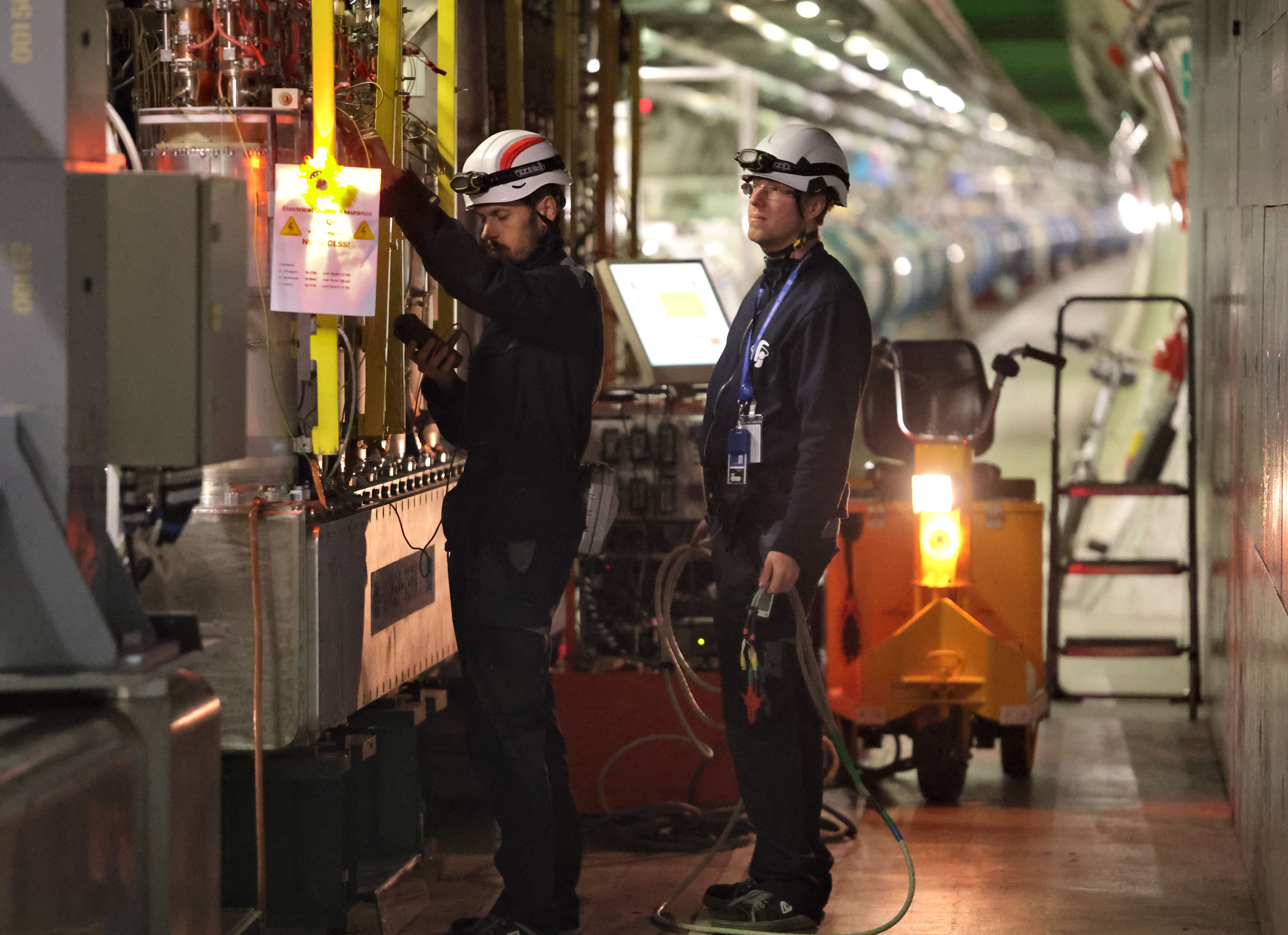
The Large Hadron Collider (LHC) has more than 1600 superconducting electrical circuits. They power the magnets that guide the beams around the 27 km ring. Every time the LHC stops for a major shutdown, all these circuits must be carefully checked following the switch-off and then again before switching them on. This is the job of the Electrical Quality Assurance (ELQA) team from the Technology Department (TE-MPE). During Long Shutdown 3 (LS3), the team is strongly engaged to prepare the LHC for its next phase: the High-Luminosity LHC.
ELQA carries out a wide range of electrical tests, and all of them must be finished and approved before the machine can be safely powered. Without them, the accelerator cannot restart.
The work follows three phases. First, the circuits are tested at cryogenic conditions as they are switched off to see if any changes have occurred after many years of operation. Then, after reaching room temperature, the circuits are again verified to ensure circuit integrity following the mechanical movements linked to the warm-up. ELQA will also support the replacement of four magnets in the arcs, the repair of 42 cold diode stacks used for magnet protection, the installation of the new HL-LHC inner triplet magnets, and many other repairs throughout the machine. Finally, each sector is tested again once the LHC is closed and cooled down, to make sure that we are ready for beam operation.
This is a big team effort involving colleagues from CERN and the Institute of Nuclear Physics in Krakow (IFJ PAN), Poland, with between ten and twenty people down in the tunnel every day for these activities.
Contributors: Marta Vargas Jorba & Jaromir Ludwin.
On behalf of the LS3 coordination.
From near absolute zero to room temperature: the LHC warm-up begins
The LHC is warming up for a major overhauling. For only the third time since it began operating in 2008, the whole machine is slowly returning to room temperature after running at close to absolute zero. Warming up more than 36,000 tonnes of cryogenic equipment across 27 kilometres of tunnel requires meticulous planning at every step. The cryogenics team has been running the warm-up sequence since the start of Long Shutdown 3 on 29 June 2026, working through two LHC sectors at a time over campaigns of about five weeks each, until the whole machine reaches room temperature on 11 September 2026.
The first step is removing the liquid helium stored inside the magnets and the cryogenic line. Heaters make it evaporate, and the gas is sent to the surface to be reliquefied and stored. CERN cannot keep all its helium inventory on site. Around 150 tonnes are shipped in specialised containers to external suppliers, who hold it until it is needed again. The transfers run for several months and are adjusted week by week to follow the warm-up. This challenging logistical operation ensures the helium is preserved and will be back before the LHC restarts.
With the helium removed, large heaters in the caverns take over, gradually raising the temperature of the magnets while a control system keeps the process safe. Operators work in shifts at the CERN Control Centre, monitoring everything continuously.
The final stage requires extra care. As materials expand with temperature, tunnel access is restricted, except under strict safety protocols. To increase the heat transfer efficiency, the insulation vacuum is deliberately degraded at two specific moments. Once the entire system is warm enough to prevent moisture damage, the job is done and the cryogenic circuits can be locked out and safely opened.

Figure 1. Liquid helium storage. Figure 2. 600kW warm-up helium heaters.

Figure 3. LHC average temperature in each sector since the LS3 start.
Contributors: Marta Vargas Jorba, Frederic Ferrand, Benjamin Bradu, Laurent Delprat.
On behalf of the LS3 coordination.
LS3 LHC begins: Electrical Lockout Successfully Completed
The start of Long Shutdown 3 (LS3) marked an important step forward with the initial power shutdown of the LHC successfully completed. The LHC electrical lockout is a crucial step to ensure the safety of future interventions on the accelerator and its associated equipment.
Following this operation, the first work authorisations related to electrical hazards were issued by the LHC Electrical Operations Manager (C2E) applying the recently deployed framework defined by the Electrical Safety Project (ESP). To date, around thirty authorisations have already been granted, including several directly related to electrical quality assurance tests (ElQA).
Reaching this number in record time, while the range of activities requiring the removal of electrical hazards remains limited, reflects the commitment and rigorous work of the teams involved. These authorisations are essential for ensuring that interventions are properly controlled and allow teams to access the relevant areas in full compliance with strict electrical safety protocols.
This progress was made possible through the close coordination and effective collaboration of the different equipment-owning groups. Their collective efforts ensured the smooth execution of the tasks planned as part of the electrical lockout activities.
Thanks to this strong cooperation, the objectives were achieved within the planned timeframe while maintaining an optimal level of safety.
Work is continuing in accordance with the LS3 schedule.

Contributors: Marta Vargas Jorba, Jerome Panigoni, Anne-Laure Perrot
On behalf of the LS3 coordination.